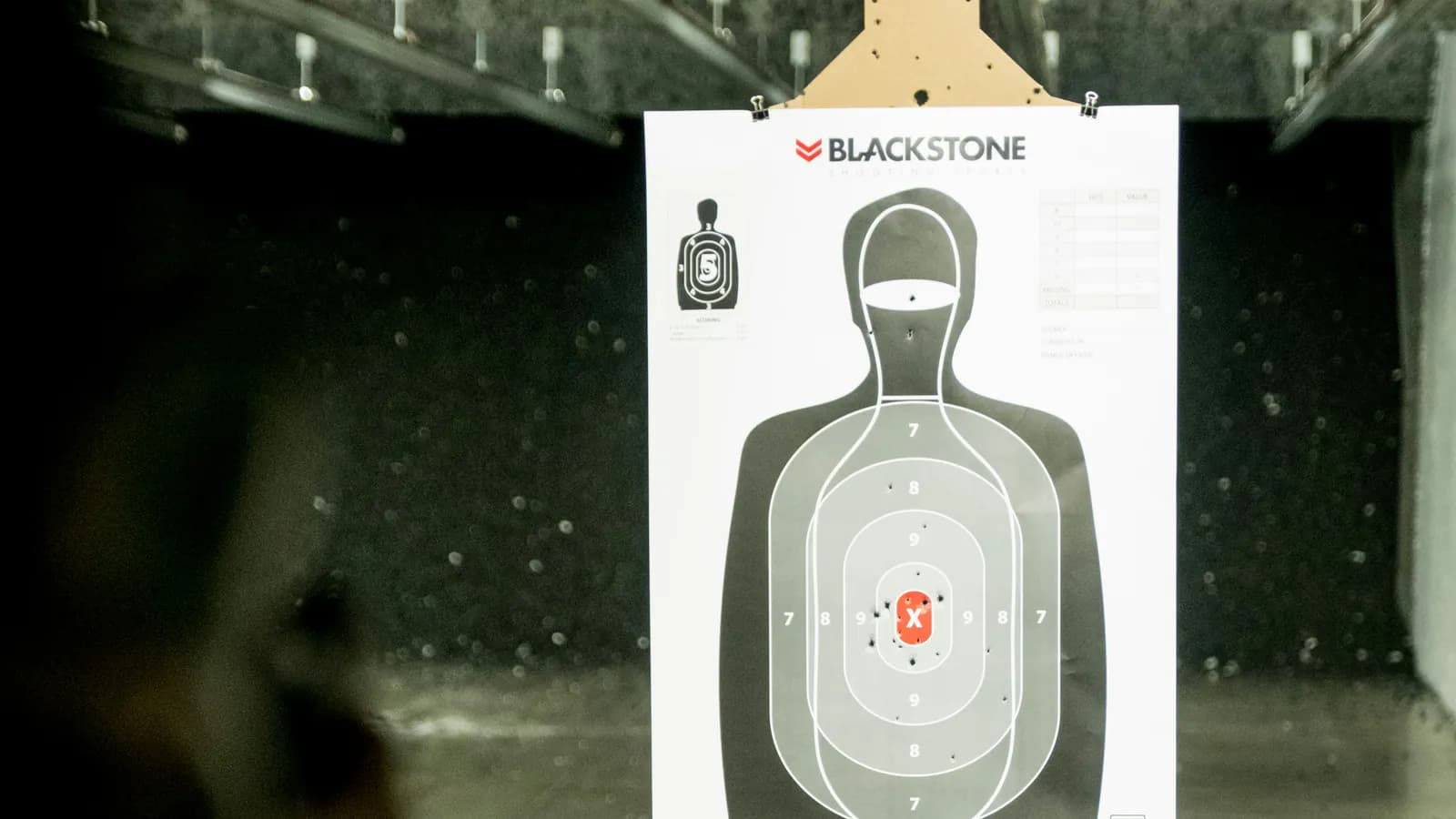
Zeroing
Zeroing Distances Explained: 10, 25, 36, 50, and 100 Yards
A reference on which zero distance to pick, for pistols and rifles. What each one is for, where the bullet crosses, who it suits, and how each one fails.
Read the article
Age verification
Outlaw Valley Tactical sells optics and accessories intended for adults. You must confirm that you are 18 or older to enter this site.
By entering you agree to our Terms of Service and Privacy Policy.
NEW PRODUCTS ADDED!
Consistency beats volume, and a short weekly session beats a big range day twice a year. Here is a schedule that survives a job, a family, and an ammunition budget.

The honest answer is not a number of rounds or a number of range trips. It is this: a short session every week will make you a better shooter than a long session twice a year, and it is not close.
Skill with a firearm is a motor skill, and motor skills respond to frequency far more than to volume. Ten minutes on a Tuesday, repeated for a year, produces someone who can perform. Three hundred rounds in an afternoon, twice a year, produces someone with a sunburn and a sore hand.
Here is what actually decays, how fast, and what a realistic schedule looks like for someone with a job and a family.
Not everything erodes at the same rate, and knowing the order tells you where to spend your limited time.
The practical takeaway is uncomfortable. The skills that matter most in a defensive context are precisely the ones that need the most frequent maintenance.
This is the structure we would give someone with a full time job, children, and a normal budget. It assumes nothing heroic.
If you can only do one of these three, do the dry fire. If you can only do two, add the coaching before the range time. That order surprises people and it is still correct.
Shooters love to report annual round counts because they are easy to count. They measure almost nothing. Ten thousand rounds fired without attention buys you ten thousand repetitions of whatever you were already doing, including the mistakes.
Measure a repeatable standard instead. The requirements for a useful one are simple: it has a defined start, a defined target, a defined distance, a par time, and a score. Something you can run in five minutes at the start of every range session, on the same target, and record.
The specific drill matters less than the fact that it never changes. A number you wrote down in February and can compare to a number from August is the only honest feedback you will get about whether your practice is working. Keep it in a notebook or a note on your phone, with the date, the gun, and the ammunition.
A word of warning about the scoreboard: if your standard only ever goes up, it is too easy. A good standard should be something you fail sometimes.
These three are not the same activity, and confusing them is the most common reason people plateau.
A useful test: if you cannot say what you were working on when you leave the range, you were just shooting.
Nearly everyone stalls somewhere. The reason is structural. You cannot see your own grip, you cannot see what your trigger finger does at the moment the shot breaks, and you cannot diagnose a problem you do not know exists. Six months of practicing around a flaw simply makes the flaw permanent.
An instructor collapses that. Most people who have been shooting for years and have never been coached get two or three corrections in the first hour that change everything downstream. That is not a criticism of self teaching. It is just what an outside set of eyes is for.
If your scored standard has not moved in three months, that is your signal. Our lessons exist for exactly this situation, in person around Phoenix or live over video, and the first session is mostly diagnosis.
Do the arithmetic before you commit to a plan, because a plan you cannot afford is a plan you will abandon in month two.
Twelve monthly range sessions at the hundred to hundred fifty rounds described above is somewhere between twelve hundred and eighteen hundred rounds a year. Add a couple of coached days and the ammunition they consume. That is a real number, and for a lot of people it is the constraint that decides everything else. If it is more than you can spend, cut the live fire rounds rather than the frequency: a sixty round session with a plan is still a session. Frequency is the variable that matters.
Time is the same story. Ten minutes, three or four times a week, is somewhere around half an hour. Almost everyone has half an hour. Almost nobody has a free Saturday once a month, which is why the Saturday plan quietly dies and the weeknight plan survives.
Some of the budget belongs to gear that makes practice possible: dummy rounds, extra magazines, a shot timer, eye and ear protection you will actually wear, and a target stand if you shoot on open land. That is what to look for in accessories. And if aging eyes are what is limiting your slow fire work, a red dot solves a problem that no amount of practice will.
The standard depends entirely on what you are doing with the firearm.
For a defensive carrier, good enough means you can present the firearm from concealment without fumbling, deliver accurate hits at close distance under time pressure, manipulate the gun without looking at it, and clear a common stoppage without stopping to think. That is an achievable bar for an ordinary person on a weeknight dry fire schedule with a monthly range session. It is not an elite standard and it does not need to be.
For a competitor, there is no ceiling, and the training load looks completely different: structured practice several times a week, matches as the testing ground, and coaching as a regular expense rather than an occasional one.
The mistake is applying the second standard to the first situation, then feeling so far behind that you do nothing at all. Consistency at a modest level beats intensity you cannot sustain.
The short version
Ten minutes of dry fire three or four times a week, one live fire session a month of a hundred to a hundred fifty rounds with a written plan, and coached instruction once or twice a year. Score one repeatable standard every range trip and write the number down. Frequency beats volume, and round count measures nothing.
Start with the free half of the plan: dry fire practice drills has the safety protocol and the specific repetitions worth doing. If you are still assembling the setup you will be practicing with, the beginner handgun setup guide covers the pistol, optic, light, and holster in the order they matter.
For the supporting gear, dummy rounds, magazines, a timer, and eye and ear protection live in accessories. When you are ready for the outside set of eyes that breaks a plateau, our lessons are the fastest way to stop practicing your mistakes.
Keep reading
A reference on which zero distance to pick, for pistols and rifles. What each one is for, where the bullet crosses, who it suits, and how each one fails.
Read the article
The questions to answer before you spend anything, how the paperwork actually works, what ships to your door versus to a dealer, and what to do in the first month after you buy.
Read the articleThe highest return training available costs nothing and takes ten minutes. Here is the safety protocol that has to come first, then the drills that actually build skill.
Read the article