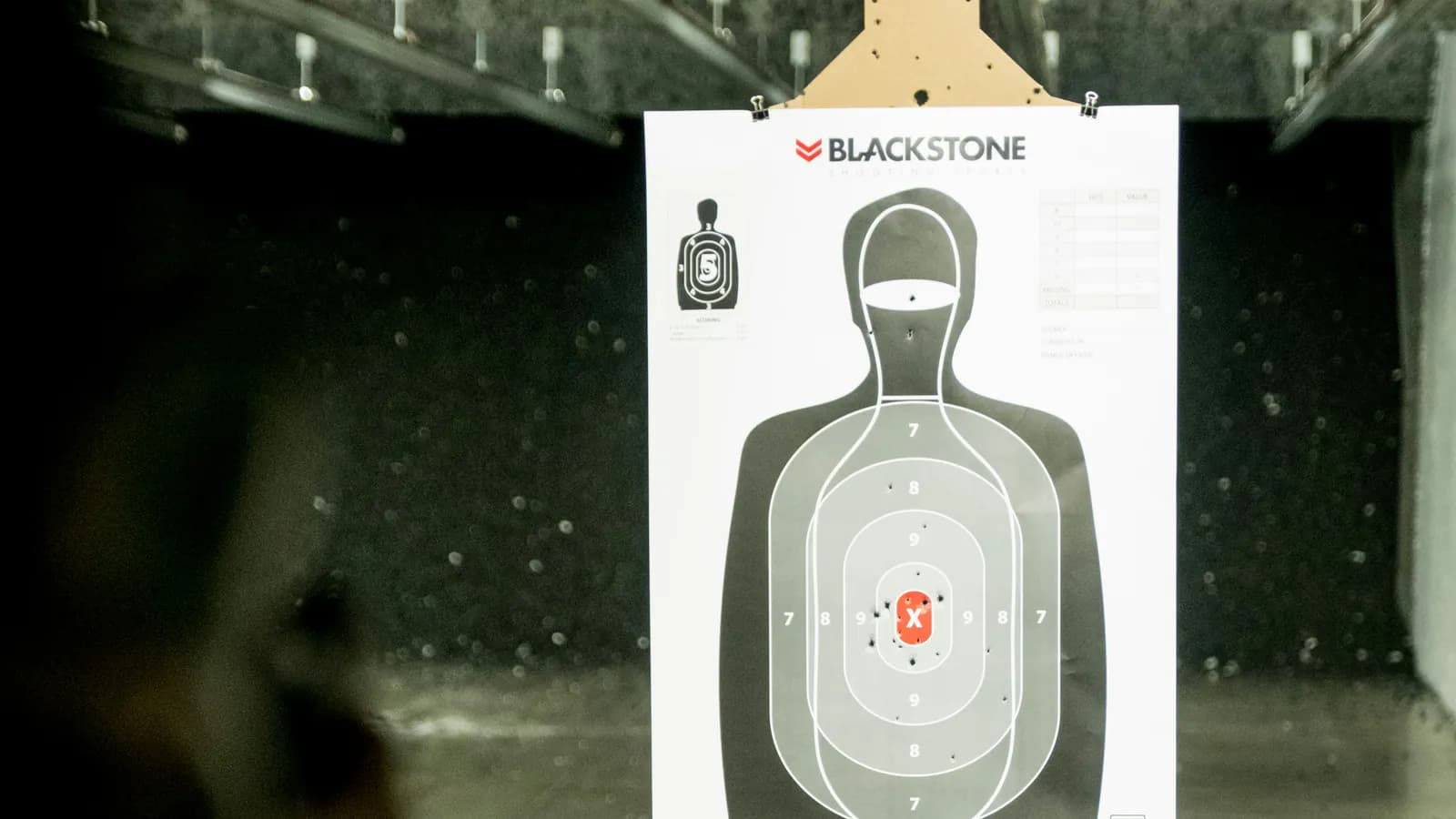
Zeroing
Zeroing Distances Explained: 10, 25, 36, 50, and 100 Yards
A reference on which zero distance to pick, for pistols and rifles. What each one is for, where the bullet crosses, who it suits, and how each one fails.
Read the article
Age verification
Outlaw Valley Tactical sells optics and accessories intended for adults. You must confirm that you are 18 or older to enter this site.
By entering you agree to our Terms of Service and Privacy Policy.
NEW PRODUCTS ADDED!
Two ways of measuring the same angle. The unit you pick matters far less than making sure your turrets and your reticle speak the same language.
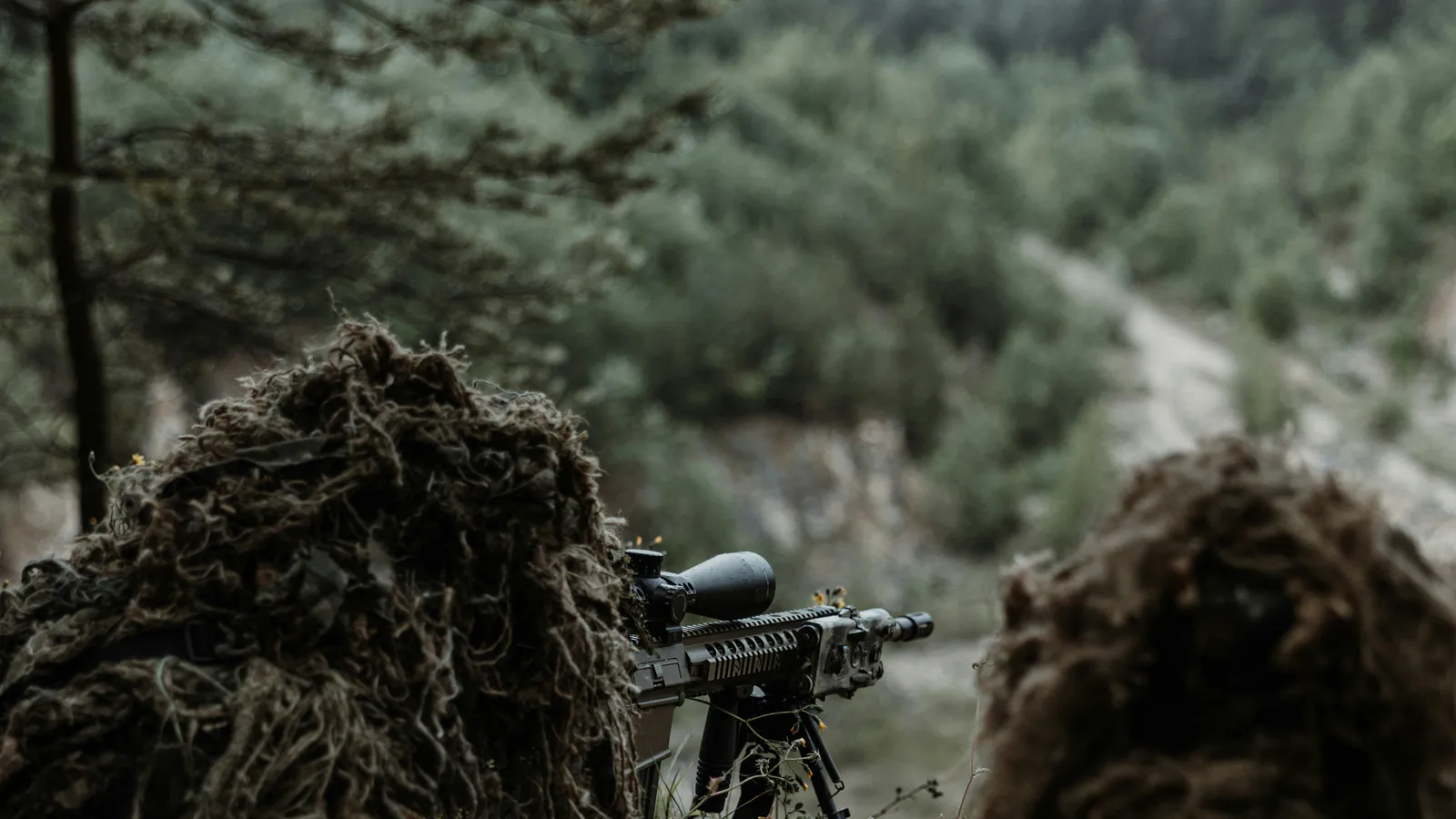
MOA and MRAD are not competing technologies. They are two units for measuring the same thing: angle. A scope turret does not move your bullet a number of inches. It tilts the optic by a tiny angle, and the further away the target is, the more that angle turns into distance on the target.
Once that clicks, the whole argument gets smaller. Both units work. Both are used by serious shooters. There is exactly one rule that actually matters, and it has nothing to do with which one you prefer.
Imagine a laser pointer taped to your scope. Tilt it a hair and the dot on the wall ten feet away barely moves. Point it at a hillside 500 yards out and that same hair of tilt moves the dot several feet. The tilt did not change. The distance did.
That is why every scope in the world adjusts in angular units instead of inches. An angular unit is honest at every distance. It means the same adjustment on a 50 yard target and a 600 yard target, and it lets you talk about corrections without first agreeing on how far away the target is.
MOA stands for minute of angle. A circle has 360 degrees and each degree has 60 minutes, so one MOA is one sixtieth of a degree. That is a very small angle.
At 100 yards, one MOA subtends 1.047 inches. Almost everyone rounds that to one inch, and for practical shooting inside a few hundred yards the rounding costs you nothing. At 1,000 yards the real figure is about 10.47 inches instead of 10, and by then the half inch per hundred yards has added up enough to notice. Some shooters call the rounded version SMOA or shooter's MOA to keep the two straight.
Useful way to hold it in your head:
It scales linearly, which is the entire appeal. If you already think in yards and inches, MOA slots into your head with no translation.
MRAD is short for milliradian, usually just called a mil. A radian is a chunk of angle defined by the geometry of a circle, and a milliradian is one thousandth of one. The practical consequence is beautifully simple: one mil subtends one unit at one thousand of the same unit.
One mil is one meter at 1,000 meters. It is also one yard at 1,000 yards, and one foot at 1,000 feet. The unit of measure cancels out, which is why calling this the metric system is wrong.
Mil scopes almost always adjust in tenths, and 0.1 mil is the number you will actually live with:
Most MOA scopes adjust in quarter MOA clicks. Most mil scopes adjust in 0.1 mil clicks. At 100 yards that works out to roughly a quarter inch per click for MOA and roughly a third of an inch per click for mil.
So MOA is finer. Slightly. About 0.26 inch versus about 0.36 inch at 100 yards. That is a real difference on paper and an almost entirely irrelevant one in the field, because the difference between the two is about a tenth of an inch at 100 yards and your group size, your position, and the wind are all larger sources of error than that.
The other side of it is that mil turrets need fewer clicks to cover the same correction, which means less counting and fewer chances to lose your place. Neither of these is a reason to buy or avoid either unit. They are just the shape of the tradeoff.
Your turret units and your reticle units must match. A mil reticle with MOA turrets is a scope that will lie to you every single time you try to use it under pressure.
Here is why. The whole point of a marked reticle is that you can see your miss, measure it against the hash marks, and dial or hold that exact amount. Miss by 0.4 mil low, dial 4 clicks up on a 0.1 mil turret, done. No math, no ballistic app, no guessing.
Now mix the units. You see a 0.4 mil miss, and your turret speaks quarter MOA. You have to convert mils to MOA (multiply by about 3.44), then divide by your click value, then count. Under a time limit, in wind, with a heart rate, you will get it wrong. Mixed scopes still get sold, usually as a cheaper configuration, and they are the single most common avoidable mistake in scope buying.
Check this before you check anything else on the spec sheet. If the reticle is described in mils, the turrets must be in mils. If the reticle is MOA, the turrets must be MOA. Any browsing you do in optics should start with that question.
The short version
MOA and MRAD are both fine. Matching your turrets to your reticle is not optional. Pick the unit your shooting partners and your data sources already use, and then stay in it.
Matched units unlock the fastest correction method there is. Fire, spot the impact, measure the miss against your own reticle, and either dial that number or hold it on the next shot.
A worked example in mils. You are on a steel plate, and your spotter calls the impact one and a half hash marks low and half a mark right on a reticle marked in 0.5 mil increments. That is 0.75 mil low and 0.25 mil right. Dial 7 clicks up and 2 clicks left on a 0.1 mil turret, or just hold 0.75 up and 0.25 left and take the shot immediately.
The same thing in MOA works identically with MOA numbers. What makes it work is not the unit. It is that the thing you are looking through and the thing you are turning agree.
This is also why holding is often better than dialing on a fast shot. Dialing is precise and repeatable and requires you to remember to dial back. Holding is instant and requires nothing but a matched reticle. Learn both, and know which one the situation calls for.
There is no correct answer, but there are patterns worth knowing.
If you have no existing habit and no strong pull either way, mil is the one that will connect you to the most instruction, the most data, and the most people. That is our lean, not a law.
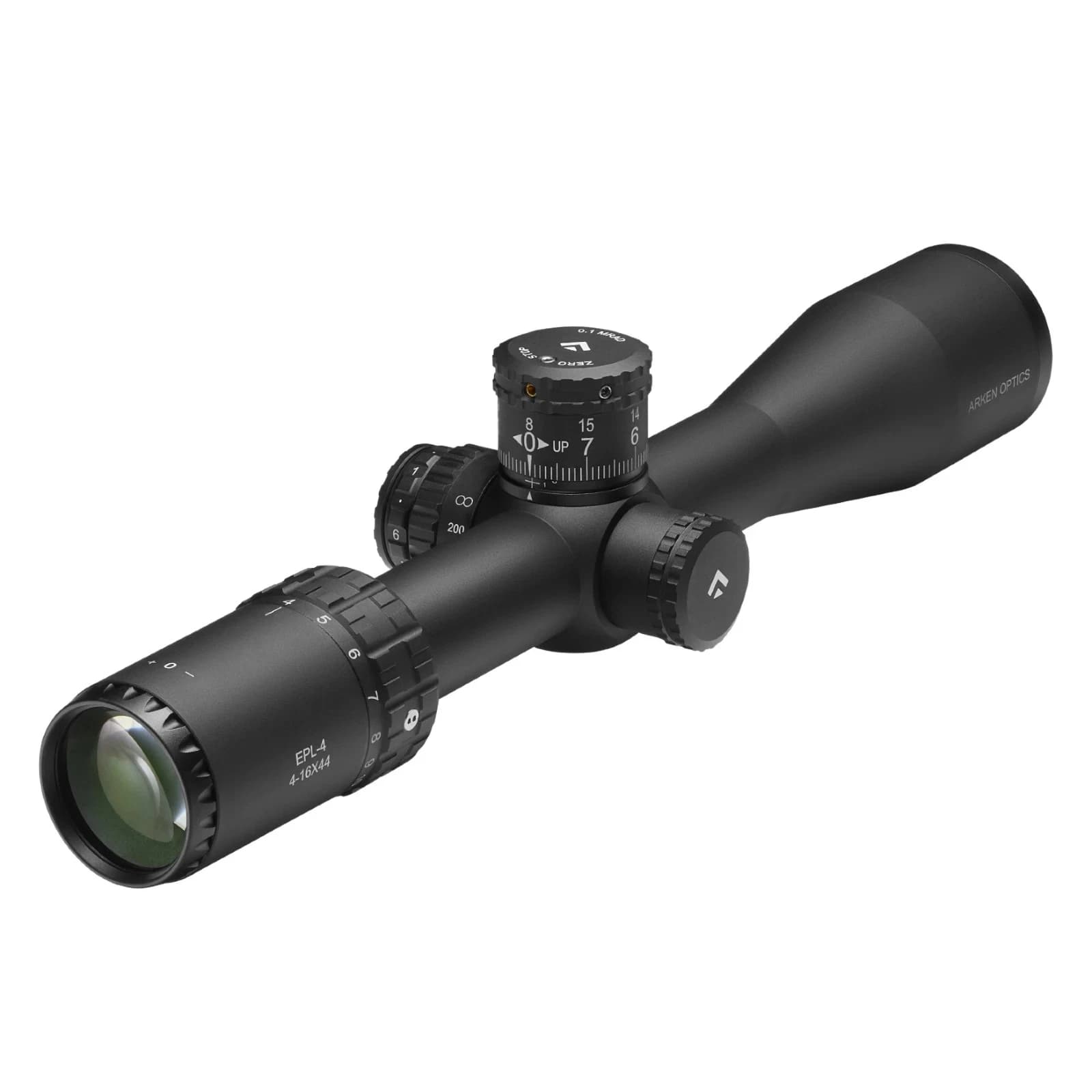
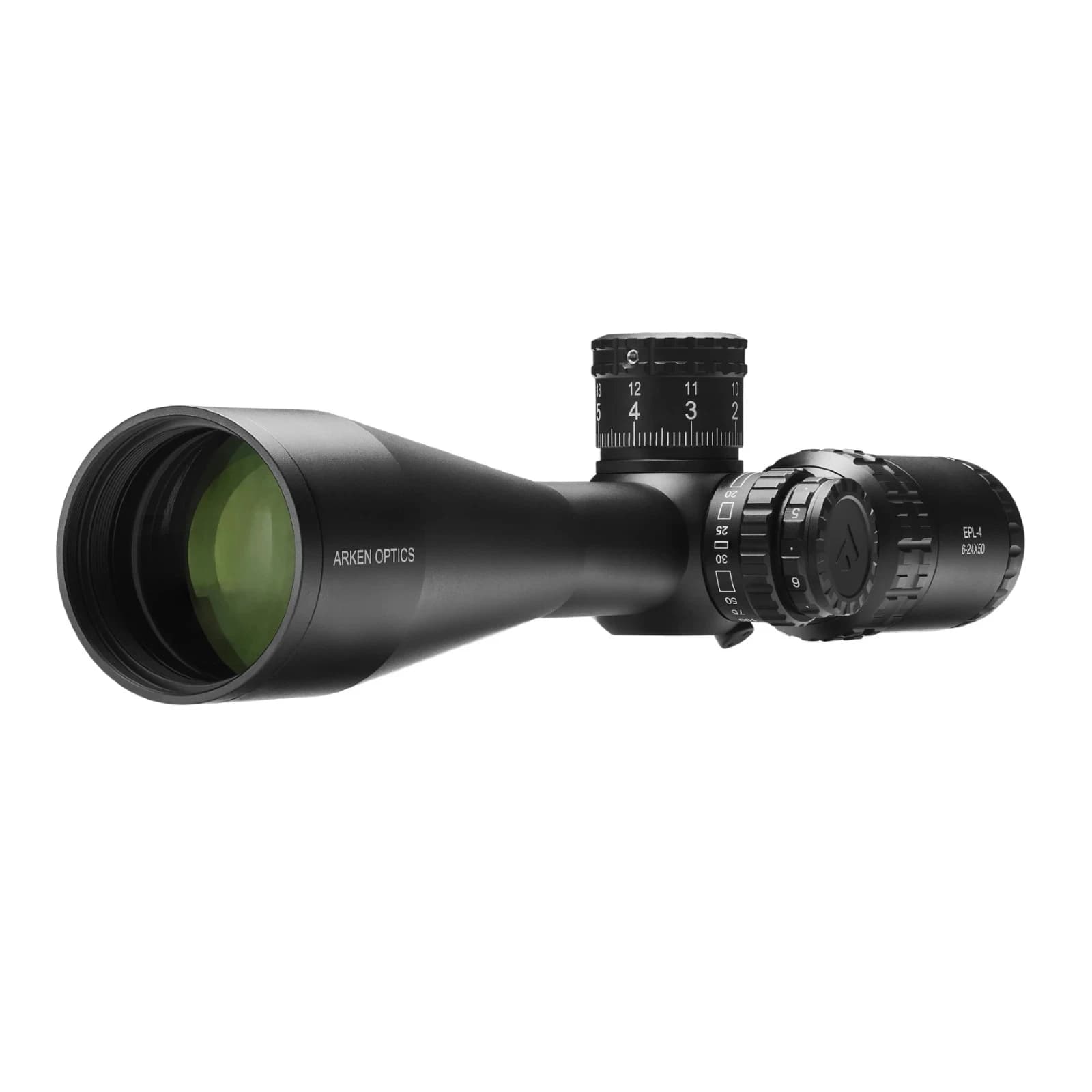
The clearest way to see that this is a labelling choice and not a quality one is to look at the same scope in both units.
Optics
Arken Optics EPL4 4-16×44 FFP VHR MOA Illuminated Reticle with Zero Stop – 30mm
$308.74
Optics
Arken Optics EPL-4 6-24X50 FFP MIL VPR Illuminated Reticle with Zero Stop – 30mm
$324.99
You will hear that MRAD is metric and MOA is imperial, and that Americans should therefore use MOA. It is not true, and the milliradian definition above is why: one mil is one unit at a thousand of the same unit, in whatever unit you like. Mils in yards work perfectly.
MOA is not imperial either. A minute of angle is a division of a degree, and degrees are not tied to any measuring system. The reason MOA feels imperial is only that 1 MOA happens to land near 1 inch at 100 yards, which is a coincidence of the numbers, not a design.
You do not need to convert your range distances or start thinking in meters to run a mil scope. Range in yards, shoot in yards, correct in mils, and nothing breaks.
A few things get blamed on the unit that are actually something else.
Before any of this matters, the rifle has to be zeroed and the zero has to be honest. Start with how to zero a red dot sight for the mechanics, then read zeroing distances explained to pick the distance that fits how you actually shoot.
When you are ready to shop, browse optics with the matched units rule in hand, and pair whatever you choose with a mount from mounts that you can torque to spec.
If reading about corrections is not making it stick, doing it with someone spotting for you will. Working a reticle, calling a miss in mils or MOA, and dialing it correctly is a coached skill, and it is one of the things our lessons cover, in person around Phoenix or live online.
Keep reading
A reference on which zero distance to pick, for pistols and rifles. What each one is for, where the bullet crosses, who it suits, and how each one fails.
Read the article
The questions to answer before you spend anything, how the paperwork actually works, what ships to your door versus to a dealer, and what to do in the first month after you buy.
Read the articleThe highest return training available costs nothing and takes ten minutes. Here is the safety protocol that has to come first, then the drills that actually build skill.
Read the article